
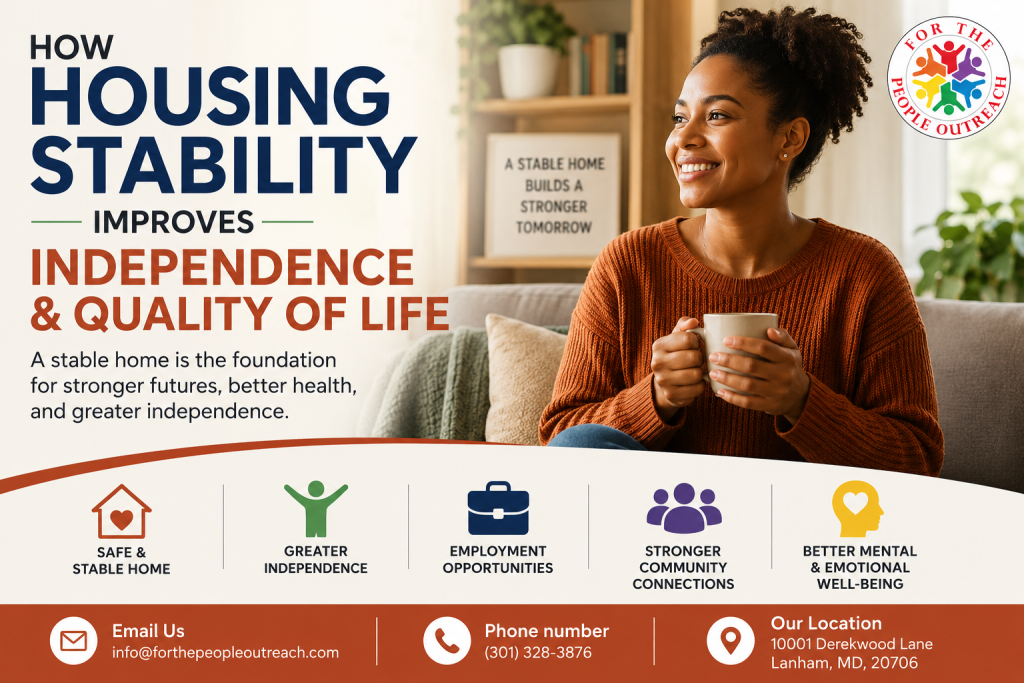
How Housing Stability Improves Independence and Quality of Life
Having a safe and stable place to live can make a meaningful difference in a person’s everyday life. When housing is uncertain, it can become harder to maintain routines, focus on employment, manage responsibilities, and stay connected to community resources.
Housing stability provides a foundation from which individuals can work toward greater independence, personal goals, and an improved quality of life. Stable housing does not address every challenge on its own, but it can create the consistency people need to focus on other important areas of life.
For individuals receiving community-based support, housing integration can also connect housing with employment, mental health services, transportation, education, and other resources.
What Is Housing Stability?
Housing stability means having a safe and dependable place to live without the constant uncertainty of losing housing or needing to move unexpectedly.
A stable home can provide more than physical shelter. It can offer a consistent environment where individuals can establish routines, organize responsibilities, maintain relationships, and plan for the future.
Housing integration takes this idea further by looking at how housing connects with other parts of a person’s life. The goal is to help individuals remain connected to their communities while accessing resources that support independence and stability.
Why Is Stable Housing Important for Independence?
Independence develops over time. It can involve learning how to manage household responsibilities, make decisions, maintain employment, use community resources, and take greater control over everyday life.
When someone has stable housing, they may have a stronger foundation for working on these goals.
A consistent home environment can make it easier to:
- Establish regular daily routines
- Manage household responsibilities
- Organize appointments and activities
- Focus on employment or education
- Build relationships and social connections
- Access healthcare and community resources
- Plan for future goals
The specific impact of housing stability varies from person to person. However, having a reliable living environment can remove some of the uncertainty that makes daily responsibilities more difficult.
1. Housing Stability Creates a Consistent Routine
Daily routines are an important part of independent living.
When housing is unstable, basic routines can become difficult to maintain. Frequent moves or uncertainty about where someone will live can interfere with sleep, meals, appointments, work schedules, and other responsibilities.
A stable home can provide a consistent environment where individuals can establish routines that work for them.
Simple routines—such as preparing meals, managing personal belongings, keeping appointments, and planning each day—can gradually support greater confidence and independence.
2. Stable Housing Can Support Employment Goals
Housing and employment can influence each other.
Maintaining a job may be more manageable when a person has a dependable place to live and can establish consistent transportation, sleep, meal, and daily schedules.
At the same time, employment can contribute to financial stability and help individuals work toward longer-term independence.
This is one reason housing support can be especially valuable when it is connected with employment and community resources.
For individuals who need additional assistance with employment goals, a Supported Employment Program (SEP) can provide another layer of support focused on workplace readiness and employment-related goals.
3. Housing Can Improve Access to Community Resources
Where a person lives can affect how easily they can access important services and opportunities.
Transportation, healthcare providers, employment opportunities, educational programs, grocery stores, and community organizations may all play a role in daily stability.
Housing integration considers these connections instead of treating housing as an isolated need.
When individuals can remain connected to their communities, they may have more opportunities to participate in activities, access services, develop relationships, and work toward personal goals.
4. Stable Housing Can Support Mental Well-Being
Housing uncertainty can create additional stress. Concerns about rent, moving, safety, or finding another place to live can make it harder to focus on other areas of life.
A stable living environment can provide a greater sense of consistency.
For individuals living with mental health challenges, housing support may also work alongside other community-based services. For example, psychiatric rehabilitation can help individuals develop practical skills related to daily living, social interaction, community participation, and independence. FTPO’s existing PRP content similarly emphasizes daily functioning, independence, and community integration.
Housing support and mental health services serve different purposes, but they can complement one another when coordinated around an individual’s needs and goals.
5. Stable Housing Can Strengthen Social Connections
Housing is also connected to social well-being.
When people have a stable place to live, they may have more opportunities to maintain relationships with family members, friends, neighbors, coworkers, and community organizations.
Community connections can provide opportunities for social interaction and help individuals feel more involved in the places where they live.
For someone who has experienced isolation or frequent housing changes, rebuilding these connections can be an important part of moving toward greater stability.
6. Housing Stability Can Improve Quality of Life
Quality of life includes more than housing or financial circumstances. It can involve physical and emotional well-being, relationships, independence, meaningful activities, employment, and the ability to make choices about everyday life.
Stable housing can support several of these areas by creating a reliable foundation.
With greater housing stability, an individual may be better positioned to focus on:
- Personal goals
- Employment or education
- Healthy routines
- Relationships
- Community participation
- Self-care
- Long-term planning
Progress may happen gradually. Even small improvements in daily stability can contribute to larger personal goals over time.
Who May Benefit From Housing Support?
Housing support may be helpful for individuals or families experiencing housing challenges or working toward greater independence.
Depending on their circumstances, people may need help connecting with:
- Housing resources
- Community organizations
- Employment services
- Transportation resources
- Healthcare services
- Mental health support
- Educational opportunities
- Other local resources
Every individual’s situation is different. Appropriate support should take personal circumstances, needs, preferences, and available resources into account.
How Housing Integration Supports Independence
Housing integration focuses on the relationship between housing and other areas of daily life.
Rather than looking only at where someone lives, an integrated approach considers whether the individual can also access the resources and opportunities needed to build stability.
This may include connecting housing with employment, healthcare, community participation, transportation, and other supportive services.
The goal is to help individuals build a stronger foundation for independent living while remaining connected to their community.
Housing Stability and Long-Term Goals
Stable housing can make it easier to think beyond immediate concerns.
When someone is not constantly worried about where they will live, they may have more opportunity to focus on longer-term goals such as finding work, continuing education, developing life skills, improving relationships, or becoming more financially independent.
These goals are different for every person.
For some, independence may mean managing a household without assistance. For others, it may mean learning new skills, maintaining employment, or becoming more comfortable navigating community resources.
The important point is that housing stability can provide a foundation for progress.
How Community-Based Support Can Help
Housing challenges are rarely limited to housing alone. Individuals may also face barriers related to employment, transportation, healthcare, mental health, finances, or daily living skills.
Community-based support can help individuals identify appropriate resources and strengthen connections between these areas.
For The People Outreach focuses on community-based support services that can help individuals work toward stability, independence, and improved quality of life. Its related services include psychiatric rehabilitation and supported employment resources.
A coordinated approach can help individuals focus on practical goals while building skills and connections that support their personal definition of independence.
Frequently Asked Questions
What is housing stability?
Housing stability means having a safe and dependable place to live without frequent or unexpected disruptions. It can provide a foundation for maintaining routines, accessing resources, and working toward personal goals.
How does housing stability improve independence?
Stable housing can make it easier to establish routines, manage household responsibilities, maintain employment, access community resources, and plan for the future.
Can housing stability affect quality of life?
Yes. A stable home can support daily routines, relationships, community participation, employment, and overall personal stability. The impact differs depending on each individual’s circumstances.
What is housing integration?
Housing integration connects housing with other areas of life, such as employment, healthcare, transportation, education, and community resources. The goal is to support stability while helping individuals remain connected to their communities.
Can housing support work alongside mental health services?
Housing support can be coordinated with appropriate mental health and community-based services. For example, PRP services may focus on practical skills, community integration, and independent living goals.
Building a More Stable Future
A stable home can be an important first step toward greater independence and a better quality of life.
When individuals have a dependable living environment, they can have a stronger foundation for developing routines, pursuing employment, maintaining relationships, accessing community resources, and working toward personal goals.
For The People Outreach provides community-focused support designed to help individuals connect with appropriate services and resources. If you would like to learn more about housing integration and related support, contact the FTPO team to discuss available resources and services.