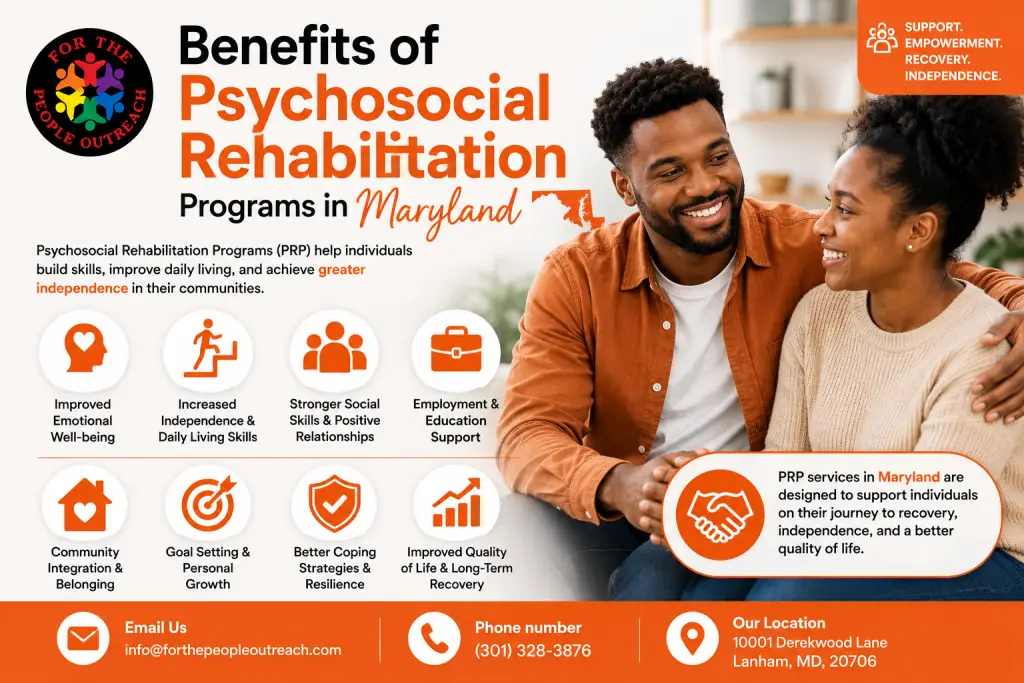
Benefits of Psychosocial Rehabilitation Programs in Maryland
Mental health recovery is not only about reducing symptoms. Many individuals also need support with daily routines, social skills, confidence, employment goals, and independent living.
Psychosocial rehabilitation, also known as psychiatric rehabilitation, helps individuals improve their quality of life through structured emotional, social, and practical support.
For individuals in Maryland, a structured Psychiatric Rehabilitation Program (PRP) can provide personalized support to help them build skills, improve independence, and participate more confidently in daily life.
What Is Psychosocial Rehabilitation?
Psychosocial rehabilitation is a recovery-focused approach that supports people living with mental health conditions. It helps individuals develop skills for independent living, social interaction, education, employment, and community involvement.
According to NAMI, psychosocial treatments can improve quality of life and help reduce difficulties at home, school, and work.
1. Improves Daily Living Skills
One of the main benefits of psychosocial rehabilitation is helping individuals manage everyday responsibilities more independently.
Through a Psychiatric Rehabilitation Program, participants may receive support with time management, hygiene routines, budgeting, appointment planning, household responsibilities, and healthy daily habits.
2. Builds Emotional Stability
Psychosocial rehabilitation helps individuals understand their emotions, manage stress, and develop healthier coping skills.
This support can help participants recognize triggers, practice problem-solving, and respond to challenges in a more stable and positive way.
3. Supports Independence
A major goal of psychosocial rehabilitation is to help individuals become more independent in their daily lives.
Maryland PRP services focus on helping individuals improve or restore independent living and social skills needed for recovery and community participation, according to Maryland COMAR regulations.
4. Strengthens Social Skills
Mental health challenges can sometimes lead to isolation. Psychosocial rehabilitation helps individuals improve communication, build healthy relationships, and participate more confidently in social settings.
These skills can support stronger family connections, friendships, community involvement, and overall emotional wellness.
5. Encourages Community Integration
Community participation is an important part of long-term recovery. Psychosocial rehabilitation helps individuals feel more connected, supported, and included in their local communities.
The Maryland Department of Health recognizes PRP services as part of behavioral health support for individuals who need rehabilitation and community-based assistance.
6. Supports Employment and Education Goals
Many individuals want to return to school, find employment, or improve workplace readiness. Psychosocial rehabilitation can support these goals through practical skill-building and structured guidance.
A PRP program may help participants with goal planning, communication skills, work readiness, problem-solving, and confidence-building.
7. Improves Quality of Life
Psychosocial rehabilitation supports the whole person, not just the diagnosis. It focuses on helping individuals live with more confidence, purpose, and stability.
SAMHSA describes recovery as a process of change where people improve health and wellness, live self-directed lives, and work toward their full potential.
How PRP Services Help With Psychosocial Rehabilitation
The Psychiatric Rehabilitation Program at For The People Outreach helps individuals develop practical life skills, emotional wellness, social confidence, and independence.
Services may include:
- Life skills development
- Emotional and behavioral support
- Social skills training
- Community integration support
- Employment readiness guidance
- Goal planning and progress support
- Coordination with mental health providers
Final Thoughts
Psychosocial rehabilitation plays an important role in helping individuals build healthier, more independent, and meaningful lives.
With the right support, individuals can improve daily functioning, strengthen emotional wellness, rebuild confidence, and work toward long-term recovery.
To learn more, visit the Psychiatric Rehabilitation Program (PRP) at For The People Outreach.